Total Pageviews
Monday, 30 December 2019
Killing Eve - Codename Villanelle - Luke Jennings
Everyone knows Killing Eve. Everyone watched the first series, considerably fewer went the distance with the second. Luke Jennings is the creator and wrote the original ebooks. Codename Villanelle is the collection of the first four (the titular first, 'Hollowpoint,' 'Shanghai,' and 'Odessa'. The good news is there are two more collections to get my greedy mitts on. The even better news is that the originals are just as good as the first TV series. Phoebe Waller-Bridge dispensed with some of the story and added other elements, but overall the punchy structure, the offbeat dark humour, the wit and the downright beauty were all kept. The lack of wit is where the second series probably went wrong.
The problem Waller-Bridge had was that Sandra Oh cost big money but she doesn't feature in the first installment, 'Codename Villanelle.' So she had to be inserted from the start. 'Killing Eve' may well become Villanelle's obsession in the successor volumes, but it isn't the plot driver here, which makes the title slightly odd. These are minor quibbles, though. I loved every minute of reading this. Luke Jennings is a master of the shorter form. Every word counts. He lingers on evocative detail, like the shoes Villanelle is wearing when she kills. He also creates wonderful images - there is a magnificent phrase about a snow-filled umber sky over grey trees - but he knows his main job is to get on with the action.
This is where comments about Villanelle being a 'female James Bond' suddenly become apposite. Fleming was a rotten writer who made up for his lack of talent with knowledge of cars and guns and exotic locations. Jennings, who I stress again is a brilliant writer, does cars and guns and exotic - but he also adds opera and Paris fashion shows and perfumes. To put it bluntly, the man's a genius. For me, 'Shanghai' is a mini masterpiece.
Friday, 27 December 2019
To the Top of the Mountain - Arne Dahl
Arne Dahl is the pen-name of Jan Arnald. To the Top of the Mountain (2000) is the third of his ten-novel A-Unit series, featuring a select team of special investigators working out of Stockholm. The A-Unit has been disbanded as we start this novel. Paul Hjelm and Kerstin Holm are still in Stockholm but now reduced to handling routine inquiries - like the young football fan who has a glass smashed on his skull in a dingy bar. This is the crime that starts everything rolling, but it has nothing to do with the main narrative. It turns out that everyone else in the bar - everyone who is not a football fan, attending a hen party, scoping out the hens or other chickens in the case of the famous Hard Homo - is part of complex overlapping conspiracies. The next thing we know a second rate gangster is blown up in his prison cell and emissaries of the principal gangster are gunned down by fascists. The main story is under way and the A-Unit is re-established to sort it all out.
This is one of the traits I like most in Arne Dahl - the way the story rolls out in all directions, to be gathered neatly together in the end. His characters are also compelling. We have the characters we already know (either on TV or in Europa Blues, the other Arne Dahl I have read and reviewed here): Hjelm and Holm, the star-crossed lovers; the Finnish thinker Arto Soderstedt; the new and unexpected midlife father Viggo Norlander; ambitious immigrant Jorge Chavez; and Sweden's biggest policeman Gunnar Nyberg, played on TV by the World's Strongest Man (1998), Magnus Samuelsson. At the start of this novel Gunnar is working for the paedophile police. He doesn't like the work but he is committed to rounding up the perpetrators. Initially he is only prepared to return part-time to the A-Unit. This introduces new characters, notably Sarah Svenhagen, daughter of Chief Forensic Technician Brynholf. Sara is investigating a highly secretive lead which ultimately leads to the unravelling of the over-arching case. Sara is a magnificent character. By the quarter-point I was captivated by her.
I liked Europa Blues. I watched and enjoyed both series of Arne Dahl on BBC4. But To the Top of the Mountain is better than Europa Blues, partly because it explores the psychology of its characters to an extent that's just not possible in TV adaptations. Arne Dahl is a major player in contemporary crime fiction.
Thursday, 19 December 2019
Trinity Six - Charles Cumming
I don't understand why Charles Cumming isn't promoted on the same scale as John le Carre, because he certainly is the frontrunner to inherit the great man's position as number one scribe of British spycraft.
Trinity Six is closer to home than most of Cumming's work, Britain-based, albeit his protagonist, UCL lecturer Sam Gaddis, gets about during the course of his fictional journey. He kind of inherits a project about the much-mooted sixth man of the Thirties communist cell at Trinity College Cambridge. He meets the man in the know (or is he?) and begins his research - only to see a key witness gunned down in front of him, only for Gaddis himself to gun down the assailant.
It seems the British SIS is not the only organisation of its ilk with an interest in suppressing the Sixth Man story. The revelation of why is splendid when it comes. The working out of the plot - a fine example of the biter bitten - is masterly. What is wrong with British TV? Why is nobody snapping up Cumming's work for must-see broadcasting?
Wednesday, 18 December 2019
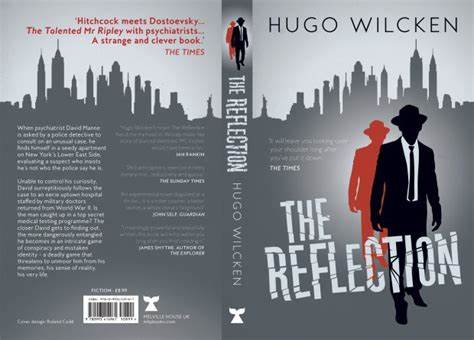
The Reflection - Hugo Wilcken
A cracking little twist on a noir meme, this. Taking his cue from John Franklin Bardin's The Deadly Percheron, which I must re-read, Wilcken conjures up a Kafka-esque nightmare in which Manhattan psychiatrist David Manne finds himself with the identity of a man he himself has committed to the mental hospital. Is he the victim of a conspiracy or is one - or both - identity a delusion? Wilcken tangles his web brilliantly, leaving us with no real answers, only questions. I loved it.
Friday, 13 December 2019
Broken Ground - Val McDermid
It was my intention to read the Karen Pirie novels in order but Broken Ground is the fifth, published in 2018. Fortunately McDermid is so skilled that it makes no real difference - she updates the reader on what they need to know, which is that Pirie's partner has been killed and she is in a period of bereavement.
The business of the Historic Cases Unit goes on however. At first it seems the body found alongside two wartime Harley Davidson motorbikes is outside the unit's remit. They only deal with deaths less than seventy years old in which there is a realistic chance of relatives and witnesses who are still living. Closer examination reveals the dead man is wearing trainers from 1995. Pirie and her gormless assistant Jason 'The Mint' Murray enter the world of wartime double agents, contemporary professional strongmen and motorhome etiquette of the mid-nineties.
The plot rolls out over 500 pages which unfold like a dream. I didn't much like the flashbacks but they were effective enough as a device for delivering the back story. I thoroughly enjoyed the development of the main characters and I especially enjoyed McDermid's daring finale in which Karen arrests her suspect but all her problems are left hanging for the next installment. So what am I supposed to do now, Val, if I find myself looking at Volume 2 and Volume 6? I know, the answer is obvious (get both), but which do I read first?
Saturday, 7 December 2019
Strangers on a Train - Patricia Highsmith
Strangers on a Train was Highsmith's debut in 1950 and, filmed by Hitchcock a year later, made her name and her fortune. I was therefore excited to come across this nicely put-together Vintage edition. I had never read any Highsmith, but surely I should, given my abiding interest in American noir. Well, now I have and I have to say I am very disappointed.
The premise is, of course, brilliant. Complete strangers meet on the titular train and agree to murder one another's victim. What can possibly go wrong? What's not to keep us turning those pages all the way to denouement?
Well, the sheer number of pages, for a start. The novel is at least 30% too long. There isn't enough story to keep us interested, the characters are too simplistic (hard-working genius and hard-shirking rich wastrel), and the writing is too overwrought. Frankly I didn't care how they got their come-uppance, I just wanted it to end.
Surely the beauty of classic noir is brevity, whereas Highsmith gives us page after page of obvious filler, almost as if she is getting paid by the word. There is, to be fair, a stab at psychological insight, however I was not convinced. The women characters, in a novel by a woman, are so poor as to border on misogyny (tart, tart and doormat). There is literary style but it is stilted and occasionally perversely anachronistic. What I suppose is meant to be the final twist - how the detective gets Haines' confession, is too hackneyed even for an old-fashioned stage thriller and wouldn't have stood up as evidence in any court even in 1950. Had I not been bored stiff by that point, I would have laughed.
Thursday, 5 December 2019
James Whale - Mark Gatiss
This biography of the Hollywood director behind Show Boat and Frankenstein was written in 1995, about the time Gatiss started with The League of Gentlemen. Whale is fascinating. He seemed to be the archetypal English gent but in fact he rose from considerable poverty in the industrial West Midlands. He was almost 40 when he took to directing at all, and hit the jackpot first time when his production of R C Sheriff's Journey's End went from pro-am to the West End, then Broadway, then for most of those involved, Hollywood.
Whale enjoyed a decade of spectacular screen successes before abruptly falling from sight. By the time America entered World War II he was more or less unwillingly retired. He took to painting and then drowned himself in his pool aged 68.
Whale's problem, of course, was that he was homosexual, not overtly but certainly not covertly. Everyone knew but not everybody had a problem. But when Whale became a problem in other areas of activity, too demanding on set, not sufficiently deferential to the new studio owners, his homosexuality was used as an excuse to get rid of him. They stopped him working but in many ways Whale had the last laugh. He always seemed to know his time in the spotlight was limited. He looked after his money when he was as highly paid as any director in town. After almost twenty years living off his savings in considerable style, he still managed to leave an estate worth over half a million dollars.
Gatiss, we all know, is a gifted writer who does his research, The book is sheer joy to read, from start to finish.
Tuesday, 3 December 2019
The Temple of Dawn - Yukio Mishima
The Temple of Dawn is the third part of The Sea of Fertility tetralogy. I would clearly of benefited from reading the preceding two first. All the same, I found The Temple of Dawn fascinating in itself as a chronicle of man in later middle age coming to terms with mortality by means of an extraordinary exploration of reincarnation as envisaged in various forms of Buddhism.
Honda is a distinguished lawyer and former judge. In 1939 he is sent to Bangkok to resolve a commercial dispute. Whilst there he is introduced to Princess Moonshine, a peripheral member of the royal family and a greatly cosseted infant. The strange thing is that she seems to understand Honda, who speaks only Japanese, and seems to suggest that she is a reincarnation of Matsugae, Honda's schoolfriend (this is essentially the plot of the novel sequence - Honda trying to save successive reincarnations of his friend).
Having won the lawsuit, Honda is rewarded with an expenses-paid tour of India, where he investigates the reincarnation belief. This is done in extraordinary detail and again, I suspect that this is the culmination of previous theorising in earlier books; in this book, considered alone, it goes on too long. Certainly a disproportionately tiny amount of space is given here to World War 2, which can't be right.
After the war, fifteen years after their first meeting, Honda meets the princess again. Now known as Ying Chan, she is studying in Japan. Honda's mission now is to find out if she has Matsugae's telltale triangle of moles on her side, beneath her arm. He goes to ludicrous, even perverse lengths - a man pursuing his obsession.
There is masterly writing here. We encounter Mishima at the height of his powers - and he was a great writer to begin with. I shall certainly track down the other three volumes of The Sea of Fertility, but perhaps something a little less demanding first.
Honda is a distinguished lawyer and former judge. In 1939 he is sent to Bangkok to resolve a commercial dispute. Whilst there he is introduced to Princess Moonshine, a peripheral member of the royal family and a greatly cosseted infant. The strange thing is that she seems to understand Honda, who speaks only Japanese, and seems to suggest that she is a reincarnation of Matsugae, Honda's schoolfriend (this is essentially the plot of the novel sequence - Honda trying to save successive reincarnations of his friend).
Having won the lawsuit, Honda is rewarded with an expenses-paid tour of India, where he investigates the reincarnation belief. This is done in extraordinary detail and again, I suspect that this is the culmination of previous theorising in earlier books; in this book, considered alone, it goes on too long. Certainly a disproportionately tiny amount of space is given here to World War 2, which can't be right.
After the war, fifteen years after their first meeting, Honda meets the princess again. Now known as Ying Chan, she is studying in Japan. Honda's mission now is to find out if she has Matsugae's telltale triangle of moles on her side, beneath her arm. He goes to ludicrous, even perverse lengths - a man pursuing his obsession.
There is masterly writing here. We encounter Mishima at the height of his powers - and he was a great writer to begin with. I shall certainly track down the other three volumes of The Sea of Fertility, but perhaps something a little less demanding first.
Wednesday, 27 November 2019
Rupert Brooke, Life, Death and Myth - Nigel Jones
Jones's book, first published in 1999 and revised for this Head of Zeus edition in 1915, is the most up-to-date study of the poet. Like Lehmann (reviewed below) it has the advantage of being written after all the guardians of the flame (the Brooke Trustees) had died and relinquished their stranglehold, but Jones rather tarnishes the freedom by making Brooke as unpleasant as possible. Some of Brooke's behaviour, particularly to women, is shameful - but I wonder, weren't we all like that when we were young and naive? Brooke was only 27 when he died, which admittedly is not all that young, but he was still financially reliant on his mother and surrounded by friends, would-be lovers and general sycophants who surely retarded the development of his character. Having now studied dozens of books on him in the last three months, I am of the opinion that Brooke only approached man's estate after his last tour to America and Canada and the South Seas in 1913-14. His behaviour seemed to moderate (Maurice Browne's 1927 Recollections are helpful in this, as he only met Brooke in 1914) and people started to see him as a man rather than a gilded youth. Certainly his poems mature considerably between Georgian Poetry (1911) and the war Sonnets (1914).
Jones's book is also absurdly long at 564 pages. You simply cannot justify that level of wordage for a man who died at 27. Equally, there are only so many times you can criticise the stifling hand of his patron Eddie Marsh and the Trustees under his lifelong friend Geoffrey Keynes. Both these men were successful and important in their own right. They believed - genuinely - they were acting in Brooke's best interests at the time and, given that neither disposed of the less flattering material, I believe it is reasonable to suppose that they realised attitudes would change in later years. Keynes was still alive when Michael Hastings produced his iconoclastic work, The Handsomest Young Man in England in 1967, and nobody tells Hastings what to write.
In summary, everything you could possibly want to know about Rupert Brooke is here in Jones. You might want to moderate Jones's rather black and white judgments a little with Lehmann and a look at Hastings (essentially a picture-book interspersed with very interesting commentary). If you can find a copy (it was privately printed) Browne is a startling insight into the modernist world that Brooke also enjoyed. Chicago is, after all, a long way from Grandchester.
Tuesday, 26 November 2019
The Sun Chemist - Lionel Davidson
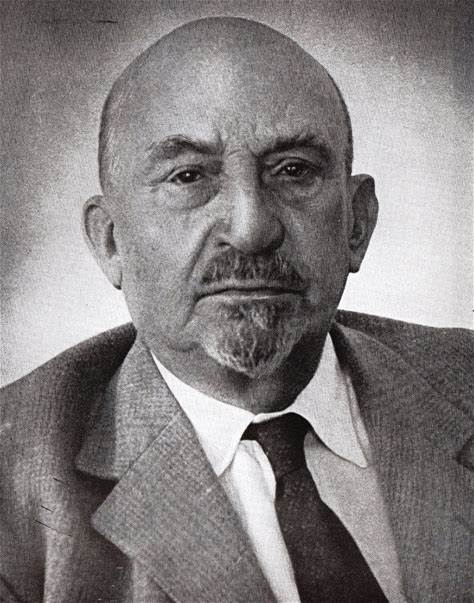
How on earth do you make a thriller out of writing footnotes for the letters of Israel's first president? Lionel Davidson shows how. Igor Druyanov, a historian of Russian descent, is commissioned to prepare a couple of installments of the massive multi-volume Letters of Chaim Weizmann (1874-1952). The years in question were Weizmann's wilderness years - like Churchill, these were the Twenties and Thirties - when he was ousted from the Zionist movement and had to revert to his original profession as a research chemist.
The key to the tension here is that the book dates from 1976 and begins a couple of years earlier, in 1974. This is when OPEC jacked up oil prices, creating a crisis in the West and making the polite, ever-smiling Sheikh Ahmed Zaki Yamani a hate figure. At rhe time it seemed as if the greedy, ungrateful Arabs were threatening the developed world with a new stone age. Indeed, the West has spent the last fifty years developing alternative power sources to avoid a repeat, whilst the Arab world has taken a more moderate line in exploiting what is, after all, their only real resource, and a finite one at that.
But Davidson's book is firmly anchored in 1974-6 and the Israel of that time, a year or so after the first Arab-Israeli war. Davidson might have been born in Hull but at this time he was living in Israel. In the story, it emerges from Igor's research that Weizmann and his research associates might have hit upon a way of synthesizing combustible fuel from root vegetables. It isn't quite so simple, and Davidson spares us none of the science, but that is essentially it: an infinite supply of fuel to a power-hungry world; a windfall beyond price to a state just establishing itself in the deserts of Palestine and the end of time to their near neighbours in the Gulf.
It's a great book and an astonishing feat of writing from Davidson. He was never a scientist, always a journalist but, by God, he does his research. Every part of the book, from the history that drives Druyanov, to the world of international science and petrochemicals, is utterly convincing. Davidson, to be fair, was a peripatetic journalist and, as I say above, lived in Israel - but I've never read anything, fact or fiction, that brings that raw state so alive. Davidson, in my view, is even better than Ambler, better than Greene, and so unusual in his choice of subjects. He deserves to be better remembered than he is. As for this book, is there a thriller in print today that is more topical?
Subscribe to:
Comments (Atom)