Total Pageviews
Showing posts with label Edward Marsh. Show all posts
Wednesday, 27 November 2019
Rupert Brooke, Life, Death and Myth - Nigel Jones
Jones's book, first published in 1999 and revised for this Head of Zeus edition in 1915, is the most up-to-date study of the poet. Like Lehmann (reviewed below) it has the advantage of being written after all the guardians of the flame (the Brooke Trustees) had died and relinquished their stranglehold, but Jones rather tarnishes the freedom by making Brooke as unpleasant as possible. Some of Brooke's behaviour, particularly to women, is shameful - but I wonder, weren't we all like that when we were young and naive? Brooke was only 27 when he died, which admittedly is not all that young, but he was still financially reliant on his mother and surrounded by friends, would-be lovers and general sycophants who surely retarded the development of his character. Having now studied dozens of books on him in the last three months, I am of the opinion that Brooke only approached man's estate after his last tour to America and Canada and the South Seas in 1913-14. His behaviour seemed to moderate (Maurice Browne's 1927 Recollections are helpful in this, as he only met Brooke in 1914) and people started to see him as a man rather than a gilded youth. Certainly his poems mature considerably between Georgian Poetry (1911) and the war Sonnets (1914).
Jones's book is also absurdly long at 564 pages. You simply cannot justify that level of wordage for a man who died at 27. Equally, there are only so many times you can criticise the stifling hand of his patron Eddie Marsh and the Trustees under his lifelong friend Geoffrey Keynes. Both these men were successful and important in their own right. They believed - genuinely - they were acting in Brooke's best interests at the time and, given that neither disposed of the less flattering material, I believe it is reasonable to suppose that they realised attitudes would change in later years. Keynes was still alive when Michael Hastings produced his iconoclastic work, The Handsomest Young Man in England in 1967, and nobody tells Hastings what to write.
In summary, everything you could possibly want to know about Rupert Brooke is here in Jones. You might want to moderate Jones's rather black and white judgments a little with Lehmann and a look at Hastings (essentially a picture-book interspersed with very interesting commentary). If you can find a copy (it was privately printed) Browne is a startling insight into the modernist world that Brooke also enjoyed. Chicago is, after all, a long way from Grandchester.
Monday, 11 November 2019
Rupert Brooke, His Life and Legend - John Lehmann
I have been reading a lot about Rupert Brooke lately, in connection with a couple of personal projects of which, hopefully, more later. There are a fair few works on Brooke but the vast majority suffer from an obvious problem - length. Brooke was astonishingly busy, he wrote a lot from an early age, he had an enormous social circle and he travelled the world. But even so, he was only 27 when he died, and you simply can't justify 500+ pages for a life that short.
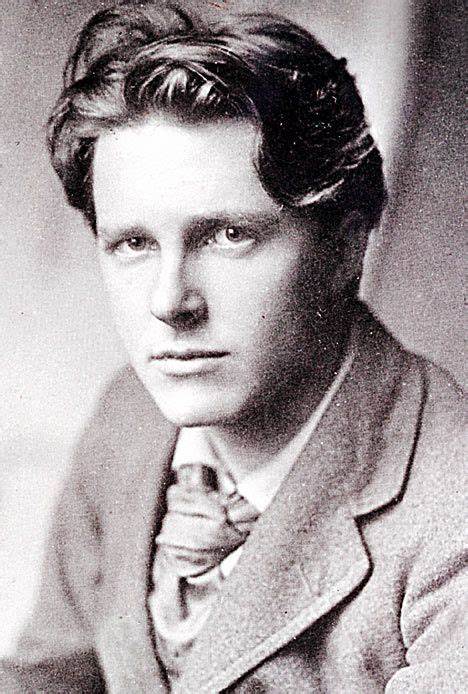
John Lehmann (1907-87) came of an astonishingly intellectual and creative family. His sister Rosamund was a novelist, his sister Beatrix a highly-celebrated actress. John was a poet and publisher. He founded New Writing in 1936, became a managing director of the Hogarth Press in 1938 and founded his own firm, John Lehmann Limited, in 1946. Finally, in 1954, he started The London Magazine. It's all very close-knit, a bit incestuous, and a bit artsy-craftsy. Which made him the perfect author for a critical biography of Rupert Brooke, who was a beneficiary and part-creator of similar arrangements before his ludicrous death in 1915. Best of all, Lehmann can do in 170 pages what Brooke's other biographers can't manage in several hundred pages. He brings Brooke alive in all his contradictory aspects - obsessed with women but offensively dismissive when the mood takes him; flirting with homosexuality but keeping his patron Eddie Marsh, who worshiped him, at a very resolute arm's length; globetrotting but always trying to micromanage his English friends. He was not a nice man but he was extraordinarily beautiful. He was a talented poet, more gifted than most in his day but did not live long enough to become truly great. And, as Lehmann says, he has been abandoned by the lirerary world which prostrated itself before his metaphorical shrine in 1915, in favour of those who came shortly after him and who lived long enough to experience the true horror of mechanized war: Sassoon, Owen and Graves.
Lehmann treats Brooke's service in a respectful and fair manner. Brooke was a volunteer, as everyone was in 1914. He did not ask Marsh, who was Churchill's secretary, to get him a safe billet in the Royal Navy Voluntary Reserve and it soon proved not to be particularly safe. Lehmann is better than most is describing Brooke's single experience of being under fire, in the long-forgotten farce of the British attempt to relieve the German siege of Antwerp. And let us not forget that Brooke was en route for the Dardanelles and the mass slaughter of Gallipoli when sunstroke did for him.
For anyone wanting to dip their toe into Brooke studies and come away with solid facts and a sound appraisal of his achievements, I cannot recommend Lehmann too highly.
John Lehmann (1907-87) came of an astonishingly intellectual and creative family. His sister Rosamund was a novelist, his sister Beatrix a highly-celebrated actress. John was a poet and publisher. He founded New Writing in 1936, became a managing director of the Hogarth Press in 1938 and founded his own firm, John Lehmann Limited, in 1946. Finally, in 1954, he started The London Magazine. It's all very close-knit, a bit incestuous, and a bit artsy-craftsy. Which made him the perfect author for a critical biography of Rupert Brooke, who was a beneficiary and part-creator of similar arrangements before his ludicrous death in 1915. Best of all, Lehmann can do in 170 pages what Brooke's other biographers can't manage in several hundred pages. He brings Brooke alive in all his contradictory aspects - obsessed with women but offensively dismissive when the mood takes him; flirting with homosexuality but keeping his patron Eddie Marsh, who worshiped him, at a very resolute arm's length; globetrotting but always trying to micromanage his English friends. He was not a nice man but he was extraordinarily beautiful. He was a talented poet, more gifted than most in his day but did not live long enough to become truly great. And, as Lehmann says, he has been abandoned by the lirerary world which prostrated itself before his metaphorical shrine in 1915, in favour of those who came shortly after him and who lived long enough to experience the true horror of mechanized war: Sassoon, Owen and Graves.
Lehmann treats Brooke's service in a respectful and fair manner. Brooke was a volunteer, as everyone was in 1914. He did not ask Marsh, who was Churchill's secretary, to get him a safe billet in the Royal Navy Voluntary Reserve and it soon proved not to be particularly safe. Lehmann is better than most is describing Brooke's single experience of being under fire, in the long-forgotten farce of the British attempt to relieve the German siege of Antwerp. And let us not forget that Brooke was en route for the Dardanelles and the mass slaughter of Gallipoli when sunstroke did for him.
For anyone wanting to dip their toe into Brooke studies and come away with solid facts and a sound appraisal of his achievements, I cannot recommend Lehmann too highly.
Subscribe to:
Comments (Atom)