Total Pageviews

Showing posts with label 1974. Show all posts

Tuesday, 26 November 2019

The Sun Chemist - Lionel Davidson


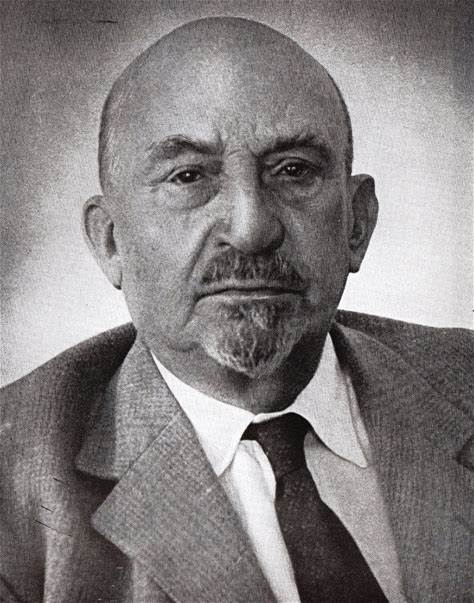
How on earth do you make a thriller out of writing footnotes for the letters of Israel's first president? Lionel Davidson shows how. Igor Druyanov, a historian of Russian descent, is commissioned to prepare a couple of installments of the massive multi-volume Letters of Chaim Weizmann (1874-1952). The years in question were Weizmann's wilderness years - like Churchill, these were the Twenties and Thirties - when he was ousted from the Zionist movement and had to revert to his original profession as a research chemist.
The key to the tension here is that the book dates from 1976 and begins a couple of years earlier, in 1974. This is when OPEC jacked up oil prices, creating a crisis in the West and making the polite, ever-smiling Sheikh Ahmed Zaki Yamani a hate figure. At rhe time it seemed as if the greedy, ungrateful Arabs were threatening the developed world with a new stone age. Indeed, the West has spent the last fifty years developing alternative power sources to avoid a repeat, whilst the Arab world has taken a more moderate line in exploiting what is, after all, their only real resource, and a finite one at that.

But Davidson's book is firmly anchored in 1974-6 and the Israel of that time, a year or so after the first Arab-Israeli war. Davidson might have been born in Hull but at this time he was living in Israel. In the story, it emerges from Igor's research that Weizmann and his research associates might have hit upon a way of synthesizing combustible fuel from root vegetables. It isn't quite so simple, and Davidson spares us none of the science, but that is essentially it: an infinite supply of fuel to a power-hungry world; a windfall beyond price to a state just establishing itself in the deserts of Palestine and the end of time to their near neighbours in the Gulf.

It's a great book and an astonishing feat of writing from Davidson. He was never a scientist, always a journalist but, by God, he does his research. Every part of the book, from the history that drives Druyanov, to the world of international science and petrochemicals, is utterly convincing. Davidson, to be fair, was a peripatetic journalist and, as I say above, lived in Israel - but I've never read anything, fact or fiction, that brings that raw state so alive. Davidson, in my view, is even better than Ambler, better than Greene, and so unusual in his choice of subjects. He deserves to be better remembered than he is. As for this book, is there a thriller in print today that is more topical?

Sunday, 22 September 2019

The Triumph of the Spider Monkey - Joyce Carol Oates

Hard Case Crime, my favourite brand of the moment, have really branched out. They now publish Stephen King and, that most literary of American writers, Joyce Carol Oates. I love Joyce Carol Oates and have done since I came across one of her earliest stories (pre-1973) in a collection from the Transatlantic Review..

What we have here is a novella from the same period, when Oates was still experimenting in authorial voice, and a shorter, linked novella from a couple of years later which has only ever been published in a literary journal.


The Spider Monkey is Bobbie Gotteson, abandoned as a new-born in a locker at the bus station. Bobbie is raised in care and detention centres, with the inevitable consequences. Upon release as a man of around thirty, but still looking young if a little monkeyish, he drifts out West with his guitar and vague dreams of becoming a star. Instead he turns into something not unlike Charles Manson, who was still on trial when Oates conceived the story.

It must be stressed, though, that Bobbie is not Charlie. He keeps his mystic powers to himself and his disciples are all in his head. But we know from the start that he is on trial for a series of murders. Among them is a houseful of air stewardesses, only one of whom has escaped. She is Dewaline, who features in the other novella, 'Love, Careless Love,' in which another footloose young drifter, Jules, is hired by persons unknown, to spy on her - for reasons unknown - as she attends to give evidence at Bobbie's trial.

Jules cannot resist approaching her. Dewaline assumes he is the driver hired (again, by persons unknown) to take her north after the trial. On the road, they become as involved as two alienated young people can be.

Oates is always worth reading. These early works are fascinating - experimental, multi-voiced, moving by jump-cuts like a post Easy Rider movie. Together, they are like reading a gonzo report from the frontline of the death of the Sixties dream.