Total Pageviews

Monday, 30 August 2021

Abraham Lincoln - John Drinkwater


Abraham Lincoln is the play that made John Drinkwater famous on both sides of the Atlantic.  He produced it at Birmingham Repertory Theatre, which he ran, in October 1918.  It then transferred to London and became an enormous hit, even though - as everyone said at the time - it had none of the usual attributes of commercial theatrical success.  There is no love interest, no jokes.  Any real conflict is either offstage or internal until the very last moment.  There are no surprises.  Barely any continuity.  Instead we jump from Lincoln at home, accepting nomination, to the White House a year later,  then two years later, then Appomattox, April 1865, and finally Ford's Theatre, a few evenings later.

What the play had, however, and what the English public desperately wanted to see as the world's worst war finally ended, was a moral hero who justified the bloodshed and pledged reconciliation.  This, of course, is not what Allied politicians ultimately delivered, but it was absolutely what the public wanted.  And it is beautifully done.  Drinkwater was a minor Georgian poet who dabbled in verse drama before he wrote Lincoln.  He was also a man of the theatre.  His father had walked out on a secure teaching job to go on the stage.  Drinkwater himself had been with Barry Jackson, who had founded and built the Birmingham Rep in 1913, for more than a decade.  He knew what the public wanted and he provided it.

The history is accurate enough, but it is revealed subtly and only when absolutely needed.  Nobody's character develops much except for Lincoln, who undergoes every bit of suffering during the bloody Civil War but keeps on going because do so is the right thing.  He frees the slaves.  He lets the defeated Confederate cavalry keep their horses to till the land.  And as we all know, for this he was shown no mercy.  The assassination, which we all know is coming, is handled in the only way it can still be shocking - in a true coup de theatre, which must have been a nightmare to stage (Barry Jackson himself designed the sets).

Traces of the conventions of the English Arts Theatre movement survive in the poetic chorus of two 'chroniclers'.  These are easily ignored for the modern reader.  We will simply say, this is why Drinkwater was the least successful of the core Georgian poets.  He made up for it by being a much better playwright than any other (and, for those who don't know, all the others wrote plays).

Thursday, 26 August 2021

The Smiling Man - Joseph Knox


OK, I was ambivalent about Knox's debut, Sirens, but I was interested enough to read this, the second Aidan Waits novel.  No reservations now - Knox is up there with the best of his generation of British crime writers.  This is a proper novel, properly original, with the full novelistic strata of interlinked storylines - plus our first real insight into our hero's pitch-black backstory.

Waits is on permanent night duty, paired with the equally toxic DS Peter Sutcliffe, who lives up to his name.  They are investigating the arson of various litter bins when the call comes in from the closed pending sale luxury Palace hotel.  There's a man in room 413.  He's smiling.  He's dead.  The only real clue to his identity is an inscribed copy of the Rubiyat of Omar Khyam.  Waits traces this to a nurse called Amy.  They bring her in to identify the body.  She doesn't need to see his face.  There is obviously one foot too many for it to be her former lover.

Then there's the case of Cherry the streetwalker, whose body is fished out of the canal.  Only Cherry is really Christopher.  The whole plot unravels along these eccentric lines.  Ir's just brilliant.

I was going to end with "I can't wait for the next Waits novel,' but it turns out I can.  Knox's next book is a true crime story, set in Manchester., and called, fittingly, True Crime Story.  That is what I want to read asap.

Saturday, 21 August 2021

V2 - Robert Harris


Harris yet again surprises with his ability to turn quite thin material into a compelling read.  I mean, everyone knows the story of von Braun and his V2 rockets.  We know they didn't win the war and we know they didn't do as much damage - or create as much fear - as the V1 doodlebugs.  Indeed, this story is so thin that Harris actually splits into two narratives - English woman, German man - to stretch it to an acceptable read.  And yet it is great fun, even thrilling at times.  How does he do it?

Well, he has clearly done his research.  That is a given with Harris.  He carefully gives us just about enough to show it is reliable without overburdening us as so many modern authors do.  For example, in order to make us even slightly interested in what happened at Peenemunde he gives us an RAF raid on the site in which Rudi Graf's love interest is killed.  Graf is Harris's German protagonist, a scientist, not a Nazi, and a friend of von Braun, who is an SS officer.  Our English heroine is Kay Caton-Walsh, a WAAF who sleeps with unsuitable men and blags herself into a proper war job, working out the launch site of rockets.  This is perhaps Harris's best device.  As the end of the war draws nearer, the protagonists in this novel are brought physically closer - Graf and the rockets at the Dutch resort of Sheveningen, Kay and the trajectory-trackers a few miles south at Mechelen in Belgium.  The thrilling part of the book comes when the Germans figure out the Allies are there and aim a rocket at them.

There are a couple of interesting characters who go nowhere, which unsettled me, notably a feisty girl who works in the Nazi brothel, and a psychopathic SS man who builds the rocket factory with slave labour.  V2 is a good book, and great fun to read, but with a bit more ambition it could have been outstanding.

Monday, 16 August 2021

The Bird's Nest - Shirley Jackson


I've read a little Shirley Jackson (We Have Always Lived in the Castle is reviewed here) but I had no idea she wrote a novel like this.  The Bird's Nest is the tangled psyche of Elizabeth Richmond, a dull 25 year-old orphan who lives with her aunt.  She suffers from back pain and headaches so her family doctor refers her to starchy old Dr Victor Wright who fancies himself adept at psychotherapy.  Wright isn't an actual psychotherapist, you understand, just an enthusiastic dabbler.

Wright hypnotises Elizabeth and unleashes multiple personalities - Lizzie, Beth, Betsy and Bess, who - rivals with one another - unleash chaos.  The trick Jackson pulls off is to tell her story through different characters.  The mark of her genius is that she doesn't do the obvious and split the narrative through the split personalities.  No, she gives us Elizabeth herself, Betsy (the most active of the alternates), Doctor Wright (twice) and fiesty Aunt Morgen.  Moreover, only the verbose, pontificating Wright narrates in the first person.  It's very clever, beautifully done, and totally engrossing.  No wonder The Bird's Nest is a Penguin Modern Classic.

Thursday, 5 August 2021

In Matto's Realm - Friedrich Glauser


A real discovery!  Friedrich Glauser (1896-1938) is called the Swiss Simenon but is far more interesting.  Here, he sets his story in a Psychiatric Clinic - the director has gone missing as has one of his patients, a self-confessed child killer.  For most writers this would mean a great deal of painful research.  Not for Glauser, a schizophrenic who had spent long periods of time in such clinics.  On top of that he was addicted to morphine and opium, had done time for forging prescriptions, and had served in the Foreign Legion.  He wasn't even Swiss - he was born in Vienna.

So what does a madman make of the madhouse?  He of course has great sympathy for the patients, but also the staff.  The most compelling character in the novel is Dr Ernst Laduner, the deputy director, who has a smile that looks like it's been pasted on, eccentric verbal tics and a taste for sometimes brutal experimentation.  And then there's Glauser's series detective, Sergeant Jakob Studer, formerly an inspector but busted back to sergeant, aged fifty, by his bete noir Colonel Caplaun, whose alcoholic son just happens to be a patient of Dr Laduner.

The story grips like a vice.  We become fully conversant with this alien world and its inhabitants.  The year is 1936.  In Germany radical events are underway but all we hear of them is an unidentified voice ranting on the radio.  This is clearly Hitler, who would have no toleration whatsoever for someone like Glauser.  And this is Glauser's genius - we have to work these things out for ourselves, though we are left in no doubt about Studer's antipathetic views on fascism.  Indeed, Studer does many things we might not expect of a heavily-built German-speaking cop coming up to retirement.

It's a thrilling, fascinating and in many ways beautiful book.  At this halfway stage of the year, it's my favourite read of 2021.

Friday, 30 July 2021

The Man Who Was Saturday - Patrick Bishop


The problem for a biographer of the politician Airey Neave is that it was interesting at the beginning and at the end with nothing of interest inbetween.  As a young man in World War II he escaped from Colditz and was the first British escapee to make it all the way home.  He went on to work with resisters in occupied Europe but, worthwhile and commendable as this was, he did most of it from a desk in Whitehall.  After the war he became a Tory MP, spending 30 years as an unexceptional backbencher.  In 1975 he organised Margaret Thatcher's successful bid for the Tory leadership.  She naturally offered him any job he wanted in the Shadow Cabinet and he chose, as his first and only front bench job, Shadow Irish Secretary.  This of course was towards the beginning of the Troubles in Northern Ireland.  Bombs on the mainland were starting and the IRA was splintering into ultra-violent factions.  One of these was the Irish National Liberation Army, which on March 30 1979 blew up Neave and his car as he was leaving the underground car park of the House of Commons.

In his lifetime Neave was known for the Colditz escape.  Now he is remembered, if at all, for his horrible death.  Those are the two events that interest Bishop in this book.  He provides good context for each and there was much that was new to me in relation to the Irish situation in the Seventies.  My main interest in seeking out the book, however, was another military disaster which Neave was witness to, and which he went on to write about - the siege of  Calais in which hundreds of allied troops were abandoned to fight to the death and so occupy the German army whilst the rest of the failed British Expeditionary Force was evacuated from Dunkirk.  Neave was there with a non-combatant searchlight squad (something I had not heard of).  He was wounded early on, quite seriously, and was ultimately taken prisoner.  There was enough here to satisfy me that I really need to get Neave's own book on the episode.

The problem, as I say, is the yawning 30-year gap in the middle.  Neave was happily married and kept busy with constituency work, work for an engineering company that employed him, and with a reasonably successful writing career.  But it's not enough to fire up any biographer.  When Neave accidentally finds himself wheeling and dealing over Mrs Thatcher's future, this reader can't help wishing he had failed.  I lived through Thatcher's reign of terror and I roundly hated her.  Neave, of course, didn't live to see what he had inflicted on his beloved country.  Bishop tries to mollify my kind of reader with regular disclaimers of the 'he probably wouldn't have agreed with her more controversial policies' variety.  Oh yes he would.  He put up with the senile Churchill, the useless Eden and the appalling Heath (who he actually hated).  Monetarism, deindustrialisation and mass unemployment were hardly going to worry him.

Wednesday, 28 July 2021

The Winter of Our Discontent - John Steinbeck


Not everything by Steinbeck is as famous as The Grapes of Wrath or Cannery Row.  But I enjoyed In Dubious Battle a couple of years ago and now I find The Winter of Our Discontent strangely moving.  It was Steinbeck's final novel, published in 1961, and got a poor reception in its day.  That is probably because it is about its day, set in the lead-up to the election that would ultimately return JFK, and also, I suspect, because it is very much an internal novel, as opposed to the wide open spaces and universality of Wrath or East of Eden.  Even a smallscale work like Of Mice and Men somehow seemed larger than this.

Ethan Allen Hawley is the scion of a historic Long Island family.  The Hawleys made whaling money but Ethan's father lost most of it before the war and Ethan himself lost the rest after returning from service.  He is now the clerk in Murullo's grocery store.  Otherwise he is happy, married to Mary with a son and a daughter and cosily housed in the Hawley family mansion.  He likes to goof about and make jokes, and, the novel being set mainly in his head, we get more than our share of his horseplay.

Then glamorous widow Margie Young-Hunt, an amateur psychic, predicts a change of fortune.  Ethan plays along and gradually sees the signs of change in real life - but only if he betrays his friends and joins the general corruption of the civic leaders.

The way Ethan's dilemma plays out took me completely by surprise.  I share many of the reservations of Steinbeck's first readers but have the ending is going to stay with me for a good long time.

Wednesday, 21 July 2021

The Long-Legged Fly - James Sallis


The Long-Legged Fly (1992) is New Orleans noir in which PI Lew Griffin searches for lost women over four decades.  Only he doesn't find them all and in the end he turns to writing New Orleans noir crime fiction featuring a shambolic PI called Lew Griffin.  Like, I mean, wow.  Post-modern or what?

The trick is, though, Lew Griffin, despite his drink problem and penchant for life's losers, is and remains a compelling character.  You can't help but side with him.  He has a bad news background but has improved his mind over the years and believably winds up with a lecturing gig on the back of his success as a writer.  The son of his first marriage is also a writer-academic.  He disappears in the last section.  The love of Lew's life, who lives in Paris, joins in to help Lew investigate.  The trail runs cold back in New York and Lew doesn't find his son, at least not in this novel.  So it's one last failed investigation.

I was startled by this book - startled mainly that I hadn't come across Sallis before.  He is extremely good and deserves to be as big as, for example, James Lee Burke.  Highly recommended.

Monday, 19 July 2021

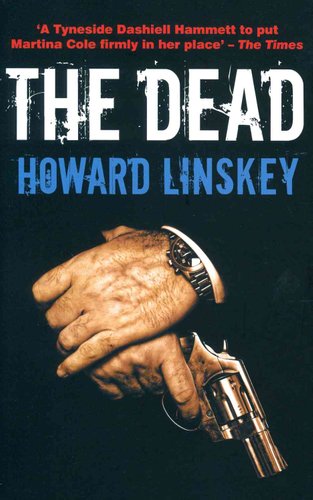
The Dead - Howard Linskey


There's a hell of a lot of story here in much fewer pages than most contemporary crime novels.  I find that extremely impressive.  Either Linskey writes like a dream or he is careful to revise as he goes.  I don't see that you can produce this standard with the get-a-first-draft-done-and-fic-it-later method.

There is also an apparent mountain of pre-story, carried forward from the previous two books which I haven't read.  No problem, Linskey gives you the exposition you need when you really need it; in the meantime, he cleverly lets you draw your own conclusions.

David Blake, at forty, has risen to the top of the crime tree in his native Newcastle.  He is married with a baby daughter.  Like any good modern entrepreneur he is already planning his exit.  But first he has unfinished business, like who killed his father, why and (unusually) when.  Then there is a Russian ex-pat zillionaire who wants to use his drug lines to smuggle men and arms into Russia.  But, most pressingly, the daughter of Blake's bete noir in the police force has just been brutally murdered and Blake's name is very much in the frame.

As I say, I was extremely impressed with this book.  I know Newcastle pretty well and nothing here jarred with me.  The story moved along at a bracing pace yet there were terrific character studies here too.  I shall be reading more Linskey.

Tuesday, 13 July 2021

Memoirs of a British Agent - Robert Bruce Lockhart


The title night suggest a secret agent, but that would have been impossible in 1933 when Lockhart published.  The title is strictly accurate.  Lockhart was the agent of the British government to Moscow in 1917 and 1918 when the British did not recognise the revolutionary regime but desperately needed them not to side with Germany in what turned out to be the second half of World War I.  Lockhart was at the time just thirty years old.  He had been with the British Consulate in Moscow before the war (the capital was St Petersburg, hence that is where the Embassy was) but had suffered a nervous breakdown early in the war and had returned to Britain.  He, however, had the social skills, the contacts and the gift for languages needed as the only British representative in critical times.  More importantly, he had a genuine love of Russia and the Russian people.  He was friends with Kerensky and arranged his escape when the Bolsheviks took over.  He then met with Trotsky on a daily basis and was greatly impressed with Lenin.  It was Lenin, on his sickbed as he recovered from the assassination attempt by Dora Kaplan, who freed Lockhart from the Kremlin where he was held prisoner during the Terror.  Whilst in prison Lockhart encountered the mysterious head of the Cheka Jacob Peters, who may have been Peter the Painter, leader of the anarchists in Sidney Street, London, during the infamous siege.  Peters gave Lockhart a present on his (Peter's) birthday in 1918 - his (Lockhart's) mistress, Moura, who herself became an infamous femme fatale.  Also of dubious allegiance was Sydney Reilly, supposedly an Englishman but actually came from Odessa.  Lockhart tells us everything he knew about Reilly - the 'Ace of Spies' - but that is almost nothing.  Nobody knew everything about Reilly.  Lockhart concludes that Reilly almost certainly set him up by concocting and releasing to the Russian Press the so-called 'Lockhart plot'.  Why Reilly might have done so remains a mystery.

There is no other English witness to these events which shaped the world we still live in.  This should be a set book for advanced level history.  Lockhart is scrupulously honest.  He was a married man when he consorted with Moura but he tells us about it nonetheless.  I have never read elsewhere about the assassination of German officials in Russia who were trying to win over the Russians to their cause.  I would have liked to learn more about the British military 'mission' sent to Archangel, but Lockhart was half a continent away in Moscow and only knew anything at second hand.