Total Pageviews

Showing posts with label Winston Churchill. Show all posts

Tuesday, 19 January 2021

The Haunting of H G Wells - Robert Masello


A fantasy adventure featuring HG versus the nefarious Hun in World War I.  The great man has embarked on his latest and greatest affair with Rebecca West when Churchill invites him to visit the trenches to write some morale-boosting pieces for the Home Front.  This leads to the haunting and a facet of trench life which I didn't know existed but probably did.  Meanwhile Rebecca visits the London home of the satanic Aleister Crowley who is sheltering the said Hun.  This leads to a showdown in St Paul's cathedral.

Masello writes in a well-practised style, easy and pacey, albeit I would have liked a touch more artistry.  What he does really well is keep the fantasy on the right side of credibility.  Overall, great fun. 

Wednesday, 3 June 2020

The Siege of Sidney Street - Frederick Oughton

Ah, the forgotten art of the film tie-in, or novelisation. OK, you still get novel versions of film and TV franchises, but surely the days sare over when a British B picture warranted the commissioning of a Pan Original, no less, to add to the pleasure of those who enjoyed the movie. Yet here is one such, by the prolific Frederick Oughton, from an original script by Jimmy Sangster, whose How-to-Write-A-Movie book I reviewed last week, and the once famous London novelist, Alexander Baron, who I suspect is also reviewed on this blog.

Odd, though, that people should want a novel when the siege was a real event, only 50 years old at the time so well within living memory, and already the subject of many non-fiction books. The story is an absolute cracker - armed police and infantrymen exchanging gunfire with a small band of anarchists, already wanted for murder, holed up in a derelict tenement. Crowds came to watch as, famously, did the Home Secretary, Winston Churchill. Indeed, Churchill's presence is likely one of the reasons that not absolutely everyone today knows about the Siege; certain elements would prefer we forget Churchill's penchant for shooting militants - and miners. Oughton - and I presume Sangster - hold back Churchill's arrival to the very last chapter, so naturally it is not an issue. The story is extremely well done, opening up the complex background through character interaction. The dialogue is effective and I noted that Oughton was very good at establishing location.

I haven't seen the film - I have no idea why the chap on the front, presumably Kieron Moore, is wearing a light-grey suit at least a decade out of period - but I absolutely devoured the book.

Monday, 11 November 2019

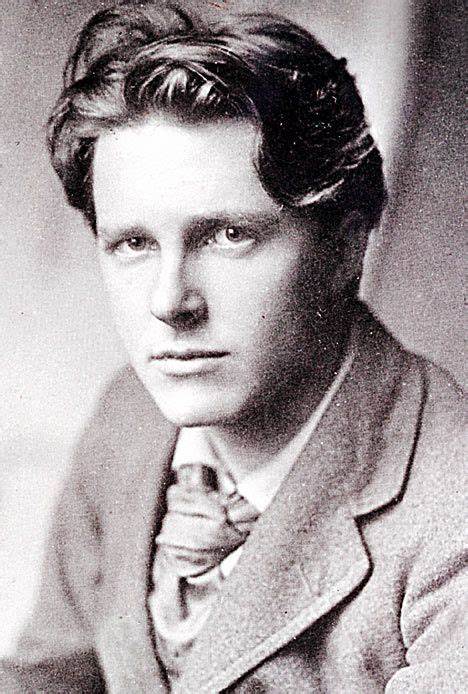
Rupert Brooke, His Life and Legend - John Lehmann

I have been reading a lot about Rupert Brooke lately, in connection with a couple of personal projects of which, hopefully, more later. There are a fair few works on Brooke but the vast majority suffer from an obvious problem - length. Brooke was astonishingly busy, he wrote a lot from an early age, he had an enormous social circle and he travelled the world. But even so, he was only 27 when he died, and you simply can't justify 500+ pages for a life that short.


John Lehmann (1907-87) came of an astonishingly intellectual and creative family. His sister Rosamund was a novelist, his sister Beatrix a highly-celebrated actress. John was a poet and publisher. He founded New Writing in 1936, became a managing director of the Hogarth Press in 1938 and founded his own firm, John Lehmann Limited, in 1946. Finally, in 1954, he started The London Magazine. It's all very close-knit, a bit incestuous, and a bit artsy-craftsy. Which made him the perfect author for a critical biography of Rupert Brooke, who was a beneficiary and part-creator of similar arrangements before his ludicrous death in 1915. Best of all, Lehmann can do in 170 pages what Brooke's other biographers can't manage in several hundred pages. He brings Brooke alive in all his contradictory aspects - obsessed with women but offensively dismissive when the mood takes him; flirting with homosexuality but keeping his patron Eddie Marsh, who worshiped him, at a very resolute arm's length; globetrotting but always trying to micromanage his English friends. He was not a nice man but he was extraordinarily beautiful. He was a talented poet, more gifted than most in his day but did not live long enough to become truly great. And, as Lehmann says, he has been abandoned by the lirerary world which prostrated itself before his metaphorical shrine in 1915, in favour of those who came shortly after him and who lived long enough to experience the true horror of mechanized war: Sassoon, Owen and Graves.

Lehmann treats Brooke's service in a respectful and fair manner. Brooke was a volunteer, as everyone was in 1914. He did not ask Marsh, who was Churchill's secretary, to get him a safe billet in the Royal Navy Voluntary Reserve and it soon proved not to be particularly safe. Lehmann is better than most is describing Brooke's single experience of being under fire, in the long-forgotten farce of the British attempt to relieve the German siege of Antwerp. And let us not forget that Brooke was en route for the Dardanelles and the mass slaughter of Gallipoli when sunstroke did for him.

For anyone wanting to dip their toe into Brooke studies and come away with solid facts and a sound appraisal of his achievements, I cannot recommend Lehmann too highly.


Thursday, 24 January 2019

Dominion - C J Sansom


Sansom is obviously best known for his historical crime series featuring Tudor lawyer Matthew Shardlake. There are, however, two standalone novels, Winter in Madrid and Dominion (2012) which are both well worth reading.


Dominion is set in 1952 (the year Sansom was born) in an alternate Britain. Here, the appeasers in government surrendered to the Nazis in 1940. A decade on, Britain has been allowed to retain its empire whilst itself becoming part of the pan-European German empire. The Nazi war machine is still fighting Russia in the east. Churchill and Attlee have been forced underground. The ghastly Lord Beaverbrook sits in 10 Downing Street with Mosley as Home Secretary and Enoch Powell as Minister for India. Hitler is no longer seen in public. Everyone knows he is ill; those in a sufficiently elevated position know he will die soon and fear that the SS and the Army will turn on one another to succeed him.


David Fitzgerald is a civil servant at the Colonial Office. He is recruited to the Resistance after his young son is killed in a domestic accident. Rather than try and heal the rift with his heartbroken wife, David would rather risk everything by secretly raiding the files at his workplace. To get at the files he flirts with one of the clerks, whom he knows is besotted with him.


Frank Muncaster was David's roommate at university, a secretive, solitary weakling with a hideous rictus grin. He was horrendously bullied at school and even his own brother loathes him. Returning to Britain for their mother's funeral, Edgar Muncaster cannot resist bragging about his top secret work in the States. Frank is so horrified that he pushes Edgar out of the window and winds up in a mental hospital. Finally Frank is so afraid of electric shock therapy that he reaches out to the only friend he ever had, David Fitzgerald.


By this point, Edgar has confessed to his employers. America might be neutral regarding Europe and its wars but Adlai Stevenson has just been elected President and there is a school of thought that he might reach out to the British resistance. There are spies everywhere, many of them double agents. The news of what Frank Muncaster knows is everywhere. The Americans obviously want him, but so do the Germans and, most of all, the British Resistance.


David's cell is charged with rescuing Frank and getting him out of the UK. The story has four main protagonists and we switch viewpoints between them. There is David's story, his wife Sarah (who finds herself involved in a truly horrifying incident in Tottenham Court Road), Frank, and Gunther Hoth of the Gestapo, who is determined to end a distinguished career by tracking them all down.


Hoth reminds me of one of the many brilliant ideas in Dominion. Hoth is based in the German Embassy in London, which is Senate House, commandeered from the University of London and draped with enormous Swastika flags. What an image that is! Equally striking is the smog which blankets key stages of the rescue operation. Another reason for setting the novel in 1952, the Great Smog only lasted four days in early December yet it changed British attitudes to burning coal forever.


Dominion is a long book but the pace never flags. The story strands are swept neatly together in a set piece finale on Brighton Beach. Sansom adds a substantial historical note at the end, which is the place to do it. It is there for those who want to read it, not something you feel obliged to wade through before starting the story. Personally I didn't read it but I did skim it and could not help noticing Sansom's unexpected views on Scottish Nationalism.