Total Pageviews

Showing posts with label Antwerp. Show all posts

Sunday, 20 July 2025

Antwerp - Roberto Bolano


 I remember reading The Savage Detectives when it first came out in English translation, sometime around the Millennium.   I loved it.   I remember eagerly awaiting the appearance of 2666.   By then Bolano had died.   I got hold of 2666 but couldn't come to terms with it.   The other day I spotted this in the British Library bookshop.   A novella - perhaps even a series of vignettes - by Bolano?   No brainer.

And I have really enjoyed it.   Antwerp might even have been his first attempt at sustained fiction, back in 1980, tinkered with over the years (as Bolano himself tells us in a sort of preface) and finally published in Spain in 2002, the year before he died.   It wasn't even called Antwerp back then.   I prefer Antwerp and Antwerp is probably my favourite anecdote in the book.

It's experimental, naturally, with few if any clear links between the fragments - a hunchback, probably Mexican, the struggling writer who can't write anything other than bursts of words, detectives on a mystery trajectory, thin young women.   It's a world of ideas whipped into a swirling mass with us, the reader, standing in the middle with Bolano, trying to snatch the odd one as it whirls by.

It's only seventy large-print pages but it took me three sittings to read.   It is so densely packed, so stuffed full of ideas and wit and suggestions of things to come.   Maybe it's time for another go at 2666.

NOTE:

Well, what do you know?   I'd completely forgotten I'd read Bolano's The Third Reich back in 2017.   I only found it when 'Roberto Bolano' turned out to be already saved in my labels.   Try it yourself - it's also in the labels for this post.   Or use the search box.   Spoiler - I moaned about 2666 but absolutely adored The Third Reich.

Monday, 11 November 2019

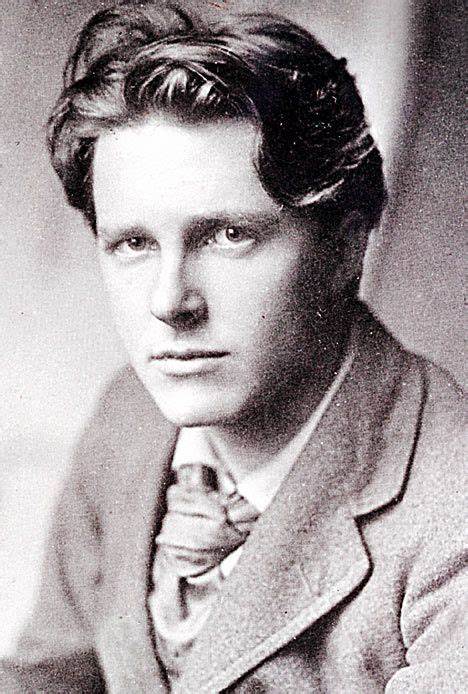
Rupert Brooke, His Life and Legend - John Lehmann

I have been reading a lot about Rupert Brooke lately, in connection with a couple of personal projects of which, hopefully, more later. There are a fair few works on Brooke but the vast majority suffer from an obvious problem - length. Brooke was astonishingly busy, he wrote a lot from an early age, he had an enormous social circle and he travelled the world. But even so, he was only 27 when he died, and you simply can't justify 500+ pages for a life that short.


John Lehmann (1907-87) came of an astonishingly intellectual and creative family. His sister Rosamund was a novelist, his sister Beatrix a highly-celebrated actress. John was a poet and publisher. He founded New Writing in 1936, became a managing director of the Hogarth Press in 1938 and founded his own firm, John Lehmann Limited, in 1946. Finally, in 1954, he started The London Magazine. It's all very close-knit, a bit incestuous, and a bit artsy-craftsy. Which made him the perfect author for a critical biography of Rupert Brooke, who was a beneficiary and part-creator of similar arrangements before his ludicrous death in 1915. Best of all, Lehmann can do in 170 pages what Brooke's other biographers can't manage in several hundred pages. He brings Brooke alive in all his contradictory aspects - obsessed with women but offensively dismissive when the mood takes him; flirting with homosexuality but keeping his patron Eddie Marsh, who worshiped him, at a very resolute arm's length; globetrotting but always trying to micromanage his English friends. He was not a nice man but he was extraordinarily beautiful. He was a talented poet, more gifted than most in his day but did not live long enough to become truly great. And, as Lehmann says, he has been abandoned by the lirerary world which prostrated itself before his metaphorical shrine in 1915, in favour of those who came shortly after him and who lived long enough to experience the true horror of mechanized war: Sassoon, Owen and Graves.

Lehmann treats Brooke's service in a respectful and fair manner. Brooke was a volunteer, as everyone was in 1914. He did not ask Marsh, who was Churchill's secretary, to get him a safe billet in the Royal Navy Voluntary Reserve and it soon proved not to be particularly safe. Lehmann is better than most is describing Brooke's single experience of being under fire, in the long-forgotten farce of the British attempt to relieve the German siege of Antwerp. And let us not forget that Brooke was en route for the Dardanelles and the mass slaughter of Gallipoli when sunstroke did for him.

For anyone wanting to dip their toe into Brooke studies and come away with solid facts and a sound appraisal of his achievements, I cannot recommend Lehmann too highly.