Total Pageviews

Showing posts with label Iain Sinclair. Show all posts

Tuesday, 20 January 2026

Introducing Swedenborg - Peter Ackroyd


 Talk about doing what it says on the tin...   Introducing Swedenborg is exactly and specifically what this short essay published by the Swedenborg Society does - and no more.   This is Swedenborg...  I'll leave you to get acquainted...  Must dash.

I've been increasingly curious about the Swedish polymath and mystic as I read more by Iain Sinclair and other psycho-geographers.   And that remains the case after reading Ackroyd's book.   I know a little more than I did, I will admit, but nothing significant.   I have learnt about his background in Sweden, how he started out as an engineer, became director of mines and a politician in the Swedish House of Peers.  I now know he spent a lot less time in London than I had thought and that Swedenborg House wasn't his actual house.   I have gained an overview of his mystical writing, which is the only part of his work that keeps his name alive, but nothing specific.   For example, who did he speak to when he was in the astral plane? 

This may be the point.   I will have to read Heaven and Hell.   I will have to look deeper into the work of writers I admire who also admire Swedenborg.   I was going to read more Sinclair anyway and I may even buy his Blake's London direct from the Swedenborg Society.

Sunday, 6 July 2025

The Lowlife - Alexander Baron


 Alexander Baron (1917-99) was a genuine Jewish Londoner. a communisr and active anti-fascist in the thirties who, after serving throughout WW2, became a professional writer - journalist, novelist and screenwriter.   This beautiful new issue of The Lowlife (1963) from Faber Edition comes with an introduction by his fellow Hackney chronicler, the mighty Iain Sinclair.

Harryboy Boas is a professional gambler in his early forties.   He lives in a rented room in Hackney, spends his days in bed or reading classic novels and his nights at the dog track.   His entire life is devoted to gambling.   The money is not important.   If he has plenty, he spends it.   All he needs to get by is rent-money and food-money for local cafes.   He is not a drinker or a womaniser.   For the latter he has an arrnagement with Marcia, an upmarket prostitute who has the same attitude to sex that Harryboy has for gambling.   Long term aspirations for both involving building property portfolios, slums earmarked for clearance, that they will let out to immigrant families.

Meanwhile in the house in Hackney a young family have moved in downstairs, the Deaners, Vic and Evelyn and their spoilt demanding toddler Gregory.   Vic is bookkeeper for a local supermarket.   Evelyn is lower middleclass and expects greater things.   When the old lady who occupies the upstairs room across the landing from Harryboy dies, a black family take over.   They are helpful, friendly people but Evelyn has the prejudices of her class.   She wants out - a move to a better district.   Vic is weak.   He gives in to the pressure and embezzles money from his employer.   Following Harryboy's example, he stakes it all on the dogs and loses the lot.   Now he needs to repay his employer and get a deposit together for a new, better flat.    Harryboy has played the big man, making empty promises.   Now Vic is pressurising him to help...

This is a brilliant read, fizzing with life and ideas plus a penetrating social study of a world in transition.   Eighty years ago the Jews were East End pariahs, unwanted immigrants with alien appearance and mysterious customs.   Now they are upwardly mobile, united against the new wave of immigrants.   I hope there will be more reprints of Baron's novels.   In the meantime, I will be scouring the sellers of second hand books, online and in person.

[NOTE: This is one of those rare occasions when I have read and reviewed a novel twice.   You can link to my review from 2013 by clicking here.

Tuesday, 11 February 2025

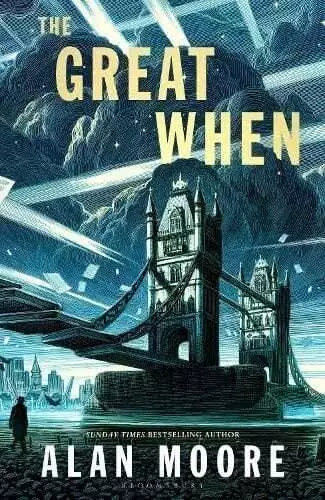
The Great When - Alan Moore


A novel by the great master of serious graphic novels.   A novel in the psychogeographical footsteps of Iain Sinclair with the imaginative spin of Michael Moorcock's Mother London.   What could be further up my street?   What could be better?   Nothing could be either: The Great When is a rush of thrills and delight from start to finish.

It is the coming of age of Dennis Knuckleyard, an orphaned teenager in 1949, working and lodging in the premises of second-hand bookseller and former starlet Coffin Ada.   Ada sends him to buy a set of books by Arthur Machen.   Dennis gets them for a snip.   But the box contains a book that shouldn't be there - a book Machen made up in two of his weird works.   Ada wants shut of it - immediately.   Dennis tries to return it to the vendor - only to find him being carried off to the morgue.

The next thing he knows, Dennis is being pursued through nighttime London by two of gangster Jack Spot's henchmen.   Down one backstreet Dennis stumbles against a crate which turns out to be a gate, a portal into a very different London.   This is Long London, a richer, more vibrant, more magical version - and somewhat more dangerous.

Back in the duller world of reality Dennis tracks down artist and mage Austin Osman Spare, former disciple of Aleister Crowley, who we met in the prologue.  Spare gets much inspiration from Long London, which he visits often.   He agrees to go there with Dennis to return the book which shouldn't exist.   First they go drinking in London's postwar Bohemia, beloved of Dylan Thomas and Andrew Sinclair (who also wrote of an alternate London in his Gog and Magog, which I sadly found unreadable).  Dennis soon meets his own Gog, Gog Blincoe, a wooden man from Long London who hangs round with a street vendor and art enthusiast called Ironfoot Jack Neave.   These are the good guys, who help Dennis rescue teenage prostitute Grace Shilling from the notorious Spot.

Spot wants to be introduced to the embodiment of all London villains, Harry Lud, a manifestation from the other London.   This doesn't go well for Spot but it seems to cure all Dennis's problems.   Jack, however, has one last visit to make, one last enemy to overcome...

Brilliantly written, every sentence brimming over with life and arcane knowledge.   I cannot wait for the next Long London novel, due out later this year.

Thursday, 5 December 2024

Downriver - Iain Sinclair


 I emerge from another protracted read.   Downriver is in some ways future fiction.   Sinclair envisages London dominated by the Widow (obviously Margaret Thatcher), whose rule is absolute and who "accepts the advice" of those who suggest she builds an enormous memorial to her late husband in Docklands.   Sinclair and his mates decide to investigate.   Meanwhile, some of them are pitching a project to the BBC's late night arts programme (under the absolute rule of Yentob) about David Rodinsky, a real-life Whitechapel mystery who was thought at the time to have disappeared, leaving behind a room above the synagogue devoted to his studies in various languages and the Kabbalah.   Sinclair himself had written a book about him with Rachel Lichtenstein, who first uncovered the story.   It later transpired (and is reported in Downriver) that Rodinsky had actually been sectioned in a mental hospital where he died.

The story, such as it ever is with Sinclair, is told in twelve instalments, as Sinclair gets further and further away from his usual East End stamping ground.   The style varies between instalments.   Sinclair is at the centre of each until we come to the last, which he asks his friend the sculptor Joblard to write because he, Sinclair, has somehow lost his voice.   It is still Joblard and Sinclair, however, as they both come to end of the line, the Isle of Sheppey, where the Thames joins the North Sea.

It is all thoroughly enjoyable but I didn't find it as intriguing as Landor's Tower or White Chappell, partly because the Thatcher trope has dated so badly since the novel came out in 1991.   Also, I am really not interested in the wastelands of Essex which I have seen for myself, thanks (I largely share Sinclair's view of it).   Because the two main premises don't grab my interest I found the book too long, though Sinclair is never boring.   As I say, I enjoyed the Rodinsky section and the Joblard switch at the end.

Tuesday, 19 December 2023

Landor's Tower - Iain Sinclair


 Sinclair's fictions are like his non-fiction: complex, deeply layered, psychogeographic, and filled to overflowing with arcane knowledge.   The latter is what we come for, the rest then seasons the mix.   As elsewhere, we begin with the book-runners, nomadic eccentrics scouring the country for bibliophilic rarities.   On their fringe is Norton, who is a writer on the side.   Some plucky soul has commissioned him to write a novel about the Victorian weirdo-aesthete Walter Savage Landor and his doomed attempt to recreate manorial life in a Welsh valley.

Sinclair is famously the psychogeographer of London.  He was born and raised, however, in Wales.   For Norton, who is really Sinclair thinly disguised, returning to Wales means returning to childhood and a long Welsh prehistory.   Time is irrelevant.   The narrative hops back and forth, action mutates into memory and vice versa.   Again, this is what brings Sinclair fans to the party.   Many of the characters he encounters are or were real.   Celebrity drug-dealer Howard Marks, for example, and a whole troop of American beat poets, many of whom I will now be checking out.   Norton falls for a woman in Hay on Wye who might be real or might be several different women.   Norton spends time in a psychiatric hospital with a bookish doctor who happens be called Vaughan.   One of Norton's manias is for the Georgian Vaughan twins, one a poet, the other an alchemist.   There is also the matter of the club foot which the owner bequeathed to Norton's father, a doctor in General Practice.

It sounds complicated and absurd because it is.   Sinclair is like Umberto Eco, only more so.   Polymath, poet, prose-wrangler and, first and foremost, a psychogeographer.   I find him and his work endlessly fascinating.

Thursday, 5 October 2023

Occult London - Merlin Coverley


 A well-written and entertaining survey of some of London's premier occult landmarks.   I was however surprised by the sites left out - Cock Lane, for example, scene of the first sensational poltergeist infestation (though not the first incidence, which is about 100 yards down the road from me in South Leicestershire).   That said, Merlin Coverley's other work helps set his field of interest.   He is a psychogeographer in the footsteps of Iain Sinclair.   His sources are Peter Ackroyd, William Blake and Geoffrey of Monmouth.   He is interested in the mythic London lying behind and beneath the facade we see today.

Though Mortlake is a bit off-piste for Coverley, he covers Dr John Dee briefly and accurately.   Again, there is much more to be said about Dee but Coverley only claims to be an introduction.   In that sense, his guide to other, more comprehensive studies is invaluable.   I have been researching these subjects for more than fifty years and there were sources here that were completely new to me.

Like Covereley's companion volume Psychogeography, Occult London is a small, short book, but it is well worth a slow and careful read.   Lack of space has required Covereley to weigh every word, carefully consider what to include and what to refer the reader on to elsewhere.   Like his concept of London, the result is multi-layered and endlessly fascinating.

Thursday, 29 April 2021

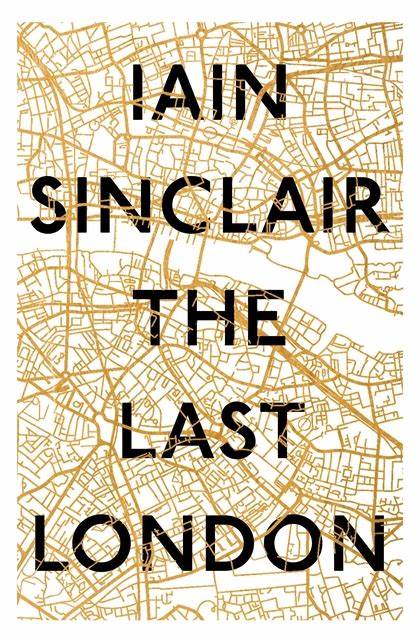
The Last London - Iain Sinclair


Sinclair's forty-year project to map the soul of London ends here.  The London he started exploring in the 1970s no longer exists; perhaps its soul no longer does, either.  Sinclair certainly struggles to find it.  When he started out London, only recently been rebuilt after the Blitz, was in apparent decline.  Rooms were cheap and plentiful, as were jobs of all kinds.  But a megapolis is always in a state of renewal and decline and Sinclair has documented the cycle.  He ends with the transients being driven from the centre to the furthest outskirts.  He starts here with London's putative great moment, the 2012 Olympics, which was alarmingly transitory, and ends with the vote to leave Europe in 2016.

Along the way he renews old friendships - fellow malcontents and dissenters, fellow psychogeographers.  They recreate former expeditions, revisiting old haunts where they still exist.  The Last London is a work of recollection, scrutiny and foresight, always moving, the synapses always firing, making and remaking connections with deeper history.  Time, for Sinclair and his associates, is not so much a progression as an accumulation.

I found it fascinating, endlessly thought-provoking.

Sunday, 8 January 2017

White Chappell, Scarlet Tracings - Iain Sinclair

Now this is a challenging read, worked and reworked until it resembles a palimpsest of interwoven narratives.


Sinclair is best known today as a psycho-geographer, exploring the effect of the deep past on contemporary cityscapes, in particular London, specifically London's East End, where he lives. When White Chappell was written in 1987 he was best known as a cutting edge modernist poet. Indeed, White Chappell combines the past and present of the author himself. It is thus a career crossroads for Sinclair.

Given the East End and the date of writing, it is no great challenge to work out what White Chappell refers to. As for Scarlet Tracings, I still have no idea. Blood trails, perhaps? Certainly that must be one interpretation. But why the medieval spelling of one and not the other...? We are not necessarily meant to know.

On one level it is about the antique book trade in the 1980s. At least one of the book scouts, Nicholas Lane, is a portrait of a real, crazed ex-rock musician who took to book dealing and who died late last year. His obituary sparked my interest in the book though I'm damned if I can find my note of his actual name. Sinclair, we must assume, is the narrator of these passages, who refers to himself as the Narrator. Here the writing is dense and poetic, almost brutalist. The seedy dealers come upon an early edition of Conan Doyle's Study in Scarlet, worth a fortune, which contains references to the Ripper murders.

The dealers do not investigate the Ripper leads, but the book does. It is established early on that Sinclair's favoured suspect is the royal physician Sir William Gull - also favoured by the legendary Stephen Knight, whose work is discussed by the dealers. To what extent Sinclair's Gull is historical, I do not know. Was he really the son of a Thames lighterman? I think we can say for sure that the way Sinclair handles his exposure and ultimate death is not historically accurate - but, wow, it is a passage that will live with me for a very long time.

Also interspersed is the story of James Hinson, a historical character who seems to have been both Gull's protege in surgery and his mentor in philosophical terms. Hinson's paganistic philosophy, available on many archival websites, is extreme to the point of derangement, but he certainly wasn't involved directly in the Ripper murders by virtue of the simple fact that he died ten years too soon. These passages are handled in letter form - letters from Hinson to his 'sister-wife' and her sister, the love of his life. Also included is a letter from Sinclair' friend and fellow poet Douglas Oliver, regarding an earlier novel, Suicide Bridge (1979), which Sinclair says is the second part of the 'triad' that closes with White Chappell, You see what I mean by palimpsest?

I know it sounds impossibly experimental but I have to say I loved it. It is absolutely up my alley in so many respects. To me, it was inspirational. I have to have more.