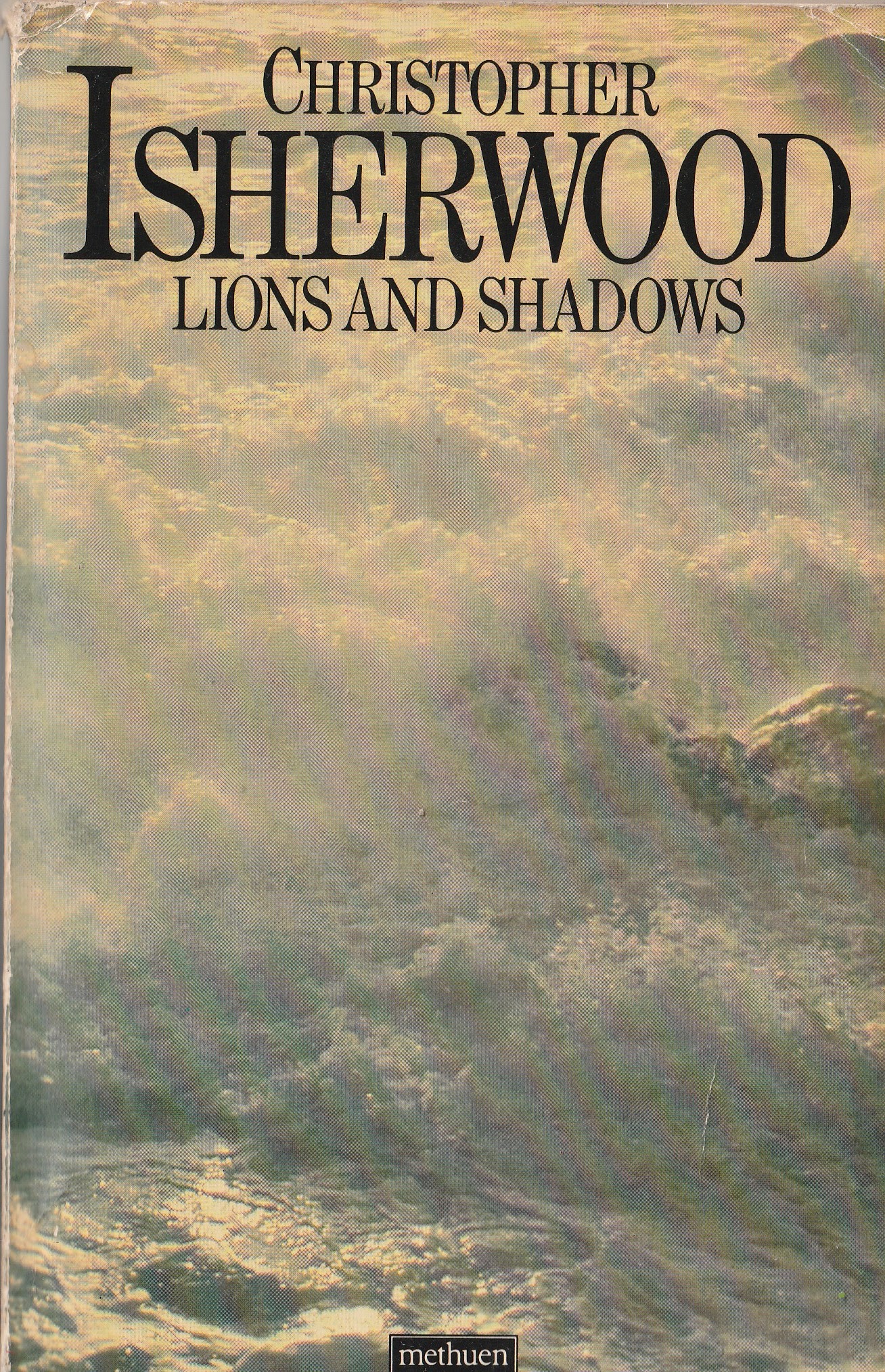
Isherwood's autobiography from 1938, written after his return to England from Nazi Germany and alongside his Berlin trilogy that ultimately became Cabaret, comes with a warning:
Because this book is about the problems of a would-be writer, it is also about conduct. The style is the man. Because it is about conduct, I have had to dramatize it, or you would not get farther than the first page. Read it as a novel. I have used a novelist's licence in describing my incidents and drawing my characters: 'Chalmers,' 'Linsley,' 'Cheuret' and 'Weston' are all caricatures: that is why - quite a part from the fear of hurt feelings - I have given them, and nearly everybody else, fictitious names.
This is slightly and deliberately misleading. There is very little that seems to be either dramatic or dramatized. The real identities of most renamed participants are obvious to those in the know (which large numbers would have been in 1938, when the era of the Auden Gang was coming to an end). 'Weston' is Auden, 'Chalmers' is Edward Upward, and 'Stephen Savage', who literally bursts in during the last chapter, is Stephen Spender. Isherwood uses fake names because these are his friends and might not remain so. Cecil Day Lewis, for example, a pivotal member of the Auden Gang, is not here at all, nor Louis MacNeice. Given that Auden was the hub around which the group revolved - everybody except Upward was a separate friend of Auden and met the others only through him - his long journey to China with Isherwood in January 1938, and removal to America, again with Isherwood, a year later, was always going to cause resentment.
Christopher remains Christopher Isherwood. The books he talks about writing are real books. The fantasy he made with Upward at Cambridge ('Mortmere') is real. The extracts of writing by Upward and Auden are all real. The book ends with the publication of Isherwood's first novel, All the Conspirators, in May 1928 and his departure for Berlin, where Auden was spending the year, in March 1929.
The area in which Isherwood holds back information is the personal. How well off his family was, far richer than any other member of the Auden circle, is never made clear. The family itself is rarely mentioned - the loss of his soldier father in the War is not here, even though the theme is Christopher finding and facing 'The Test' which the previous generation of men faced in the War to End All Wars. The big unmentionable, though, is Isherwood's homosexuality. Obviously this was illegal in Britain at the time and, in fairness, he finally came to terms with it in Weimar Germany. It is therefore a subject dealt with in his books about his life in Germany, in the mighty A Single Man (1964) and in the eventual successor to Lions and Shadows, Christopher and His Kind (1976). Perhaps, then, discounting the role his sexuality must have played in his friendships with these lightly-disguised literary men is the fictional element.
In summary, a fascinating experiment and an enthralling read.

