Total Pageviews

Showing posts with label poetry. Show all posts

Tuesday, 7 October 2025

The Strings are False - Louis MacNeice


 An Unfinished Autobiography is the subtitle and something of an understatement.   A Scarcely Begun Autobiography would be more accurate.   What it is, in detail, is a conflation of two manuscripts left with his friend E R Dodds in 1941 (when MacNeice was only 34) and not touched again until after MacNeice's death in 1963.   It is then padded out with another account by MacNeice of his childhood and an essay by John Hilton who knew him well at school and university.

There is thus nothing about MacNeice's innovative and important radio plays, virtually nothing about his writing or his close association with W H Auden and Stephen Spender.   The other member of the circle, Cecil Day Lewis, only merits a single line in The Strings are False; it as if MacNeice barely knew him.   Indeed, why anyone who seems determined to say nothing revelatory about himself or his emotional life should want to even start an autobiography defeats me.   His divorce - his wife ran off to America with their lodger, leaving MacNeice to bring up their year-old son alone - warrants only slightly more detail than Day-Lewis.   He doesn't bother to tell us the lodger's actual name (Charles Katzmann).

That said, this is all there is - the only personal writing MacNeice ever did.   Before the war (the time I am reseaching) MacNeice seems to have been the perpetual absentee in literary circles - always somewhere else - but nevertheless making a name for himself as poet and lecturer.   If you want to know about Auden in the Thirties (and again, I do) you have to read The Strings are False.   If you have to read The Strings are False, it helps to know quite about poetry of the 1930s and MacNeice's place in it.

Friday, 13 September 2024

W H Auden - Richard Hoggart


 I find Longman's Writers and their Work series absolutely invaluable: authoritative criticism given in brief, with an overall assessment built up from focused scrutiny of the major works.   Richard Hoggart is just about as authoritative as they come: tutor, lecturer and professor at Hull, Leicester and Birmingham, three cities very important to me.   His first book was a study of Auden in 1951 and that led to this distillation and update of his thinking in 1957 (though he revised it a further three times).   

I have hitherto found Auden off-putting, but my own researches have shown how significant he was considered when his first volume came out in 1931.   He founded a movement which was not really a movement, more a circle with him at the centre, some key like-minded friends who were not necessarily friends of each other, and a whole bunch of imitators.   Auden changed, understandably, after he moved to America immediately before the war, and the subsequent work is not my particular interest at the moment.   Nevertheless Hoggart's account of it had me gripped.

Monday, 11 November 2019

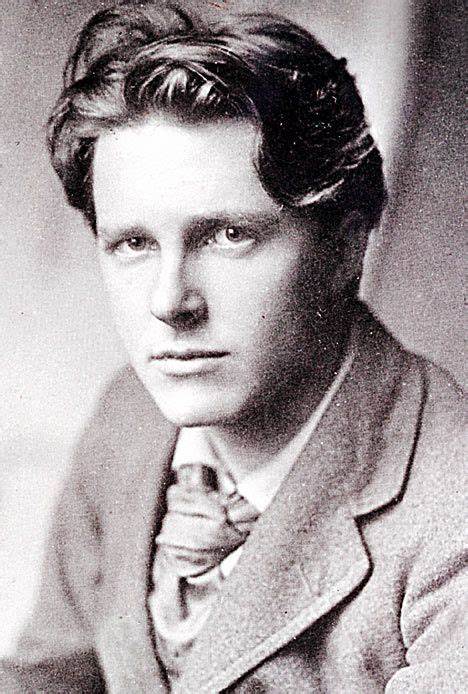
Rupert Brooke, His Life and Legend - John Lehmann

I have been reading a lot about Rupert Brooke lately, in connection with a couple of personal projects of which, hopefully, more later. There are a fair few works on Brooke but the vast majority suffer from an obvious problem - length. Brooke was astonishingly busy, he wrote a lot from an early age, he had an enormous social circle and he travelled the world. But even so, he was only 27 when he died, and you simply can't justify 500+ pages for a life that short.


John Lehmann (1907-87) came of an astonishingly intellectual and creative family. His sister Rosamund was a novelist, his sister Beatrix a highly-celebrated actress. John was a poet and publisher. He founded New Writing in 1936, became a managing director of the Hogarth Press in 1938 and founded his own firm, John Lehmann Limited, in 1946. Finally, in 1954, he started The London Magazine. It's all very close-knit, a bit incestuous, and a bit artsy-craftsy. Which made him the perfect author for a critical biography of Rupert Brooke, who was a beneficiary and part-creator of similar arrangements before his ludicrous death in 1915. Best of all, Lehmann can do in 170 pages what Brooke's other biographers can't manage in several hundred pages. He brings Brooke alive in all his contradictory aspects - obsessed with women but offensively dismissive when the mood takes him; flirting with homosexuality but keeping his patron Eddie Marsh, who worshiped him, at a very resolute arm's length; globetrotting but always trying to micromanage his English friends. He was not a nice man but he was extraordinarily beautiful. He was a talented poet, more gifted than most in his day but did not live long enough to become truly great. And, as Lehmann says, he has been abandoned by the lirerary world which prostrated itself before his metaphorical shrine in 1915, in favour of those who came shortly after him and who lived long enough to experience the true horror of mechanized war: Sassoon, Owen and Graves.

Lehmann treats Brooke's service in a respectful and fair manner. Brooke was a volunteer, as everyone was in 1914. He did not ask Marsh, who was Churchill's secretary, to get him a safe billet in the Royal Navy Voluntary Reserve and it soon proved not to be particularly safe. Lehmann is better than most is describing Brooke's single experience of being under fire, in the long-forgotten farce of the British attempt to relieve the German siege of Antwerp. And let us not forget that Brooke was en route for the Dardanelles and the mass slaughter of Gallipoli when sunstroke did for him.

For anyone wanting to dip their toe into Brooke studies and come away with solid facts and a sound appraisal of his achievements, I cannot recommend Lehmann too highly.


Thursday, 22 December 2016

Ted Hughes: The Life of a Poet - Elaine Feinstein


Published in 2001, this was the first full-length biography of the enigmatic Hughes. As such, it laid out the groundplan which others have since followed. A fair bit of detail about the childhood years, a long account of the six-year marriage to Sylvia Plath, and a brisk canter through the remaining thirty-five years.


Feinstein is herself a poet, thus her insights into Ted's work are particularly valuable. She was a friend of Ted and fellow client of his sister/agent Olwyn. As such, she provides a welcome counterbalance to many of the more militant accounts from the pro-Plath camp. Whilst she does rather gallop through the second half of Hughes's career, she nevertheless takes due time to consider and evaluate the stream of work he maintained. She even delves into areas that few others mention - his prose work, for example, notably the vast Shakespeare and the Goddess of Complete Being. She is frank in her depiction of the always controversial Olwyn and generous in her account of Carol, Ted's second wife. Ted's death, which was fresh in her mind when she wrote the book, is profoundly moving.


The only area in which I take exception is a series of broad and unsupported generalisations which for reasons unknown Feinstein makes about Northern men and their attitude to women. It is an area in which I may be better qualified, being myself a Northern man, a generation younger than Hughes, admittedly, but from the next valley along with most of my ancestry from the same valley as him. I even share his South Yorkshire connections. And I can assure Feinstein that, in my experience, she could not be more wrong in her assumptions about the term 'mother' when used as a synonym for 'wife'.


With that proviso, which is of course always open to argument, there can be no better place to start delving into the life of England's greatest poet of the late Twentieth Century.

Wednesday, 20 January 2016

The God of Glass - Peter Redgrove

We're into the dark meat here, only for those of obscure tastes.  Redgrove, of course, is best known as a poet, but he also wrote lots of fiction and drama.  God of Glass was originally a radio play, in which form it won the 1978 Imperial Tobacco award for best original radio play.  That is what brought it to my attention. As regular followers will know I am a Doctor of Radio Drama, perhaps even the only Doctor of Radio Drama.  My current exploration of the original radio work of Ted Hughes brought up the link with Redgrove (which is very apparent in this novelisation).  I haven't tracked down the radio script yet, but I will, and I have just acquired some more of Redgrove's plays which I will review here in due course.

Anyway, first and foremost The God of Glass reminds us that the Seventies were a long, long time ago.  I was doing my first Drama degree when the play was commissioned and dropping out in my native Lancashire witch-country when it was produced.  I remember those times but I had forgotten the sort of ultra-sexualised earth-goddess cult which Hughes and Redgrove explored in their work, even though I was living in the middle of it and knew many pre-New-Age practitioners.  I probably forgot about it because it was so over-the-top and - as the cover image of the 1979 original hardback above suggests - bloody.

Geoffrey Glass is an African man who, released from a life sentence, appears in Cornwall as a perfectly civilised shaman.  The village is being plagued by pubescent girls in the throes of demonic possession.  The vicar is killed in a failed exorcism (this was the era of The Exorcist, remember) and Glass, who hasn't been involved in any way before - that is to say, he did not create the possessions - joins in the cure with more success.  He is espoused by the mothers of the victims and soon a Glass movement is spreading across the country.  Glass becomes a national icon - only to submit himself to the judgement of his peers, the officers of his movement, chiefly from the Cornish village where it all began, when his past comes to light.  Then, in a worldwide live telecast, all hell literally breaks loose.

As to why it is subtitled "A Morality", who better than Redgrove himself to explain?

...because it seeks, by adopting the mode and idiom of a horror story of exorcism, to redirect attention to the serious themes of adult rebirth, and the dire consequences of masculine non-participation n feminine blood-mysteries, behind the usually conventionalised currency of the modern supernatural tale.
It is all very, very weird.  Even the style - disjointed chapters, of startlingly different length, with occasional poetry thrown in - is unique.  How anything like this was achieved on BBC radio I cannot imagine.  But I was completely hooked and am intrigued to explore further.  This is writing on the furthest frontier, not just in its day but now.  Further dispatches from the front will follow.

Tuesday, 2 September 2014

The Mersey Sound - Penguin Modern Poets 10


Yes, the classic collection from 1967, one of the best selling poetry anthologies of all time.  It was and may still be hugely influential, but it is also (naturally) dated and often shallow behind the surface shine.

The late Adrian Henri has dated the most - no doubt because he was the oldest poet represented and also the most tied to contemporaneity.  His Alf Jarry/Pere Ubu references would have been the ultimate in avant garde in the early sixties - they are less so now.  That said, I found Henri's sad love poetry very touching, notably 'Without You' and 'Where'er You Walk'.

Roger McGough was the one I liked best at the time and like least forty years on.  The poems here really are the epitome of shallow.  I know he swapped some for the revised edition and he has certainly acquired depth in his later work. The poems here are heavily redolent of John Lennon in his Spaniard in the Works, sub Spike Milligan phase.

Patten's the one, though.  Only 21 when this collection was first published but even then transparently the most significant poet of the three.  Every single entry here has to be read slowly and carefully to find meaning and fully take onboard the emotion.  I remember seeing Patten and McGough in a show with members of the Bonzo Dog Doo-Dah Band in 1973 or maybe 1974.  McGough was always a natural performer whereas Patten opted for the nasal whine favoured by modern bards.  This really is the difference.  Henri and McGough's poetry is meant to be read out with actions and voices and comedy where appropriate.  Patten can of course be read out loud but it's really meant for the printed page.

Adrian Henri died some time ago, McGough is a national treasure, but what happened to Brian Patten?  He's still under 70 but I haven't heard anything of him for years.  According to Wikipedia he's still active.  I must look more carefully for more recent collections.